Yupoo, the image host behind seller albums
Who runs Yupoo, what an album page is built from, which features cost money, and why an album seller is almost always paid through a China shopping agent.
Yupoo itself: an image host from Hangzhou since 2005
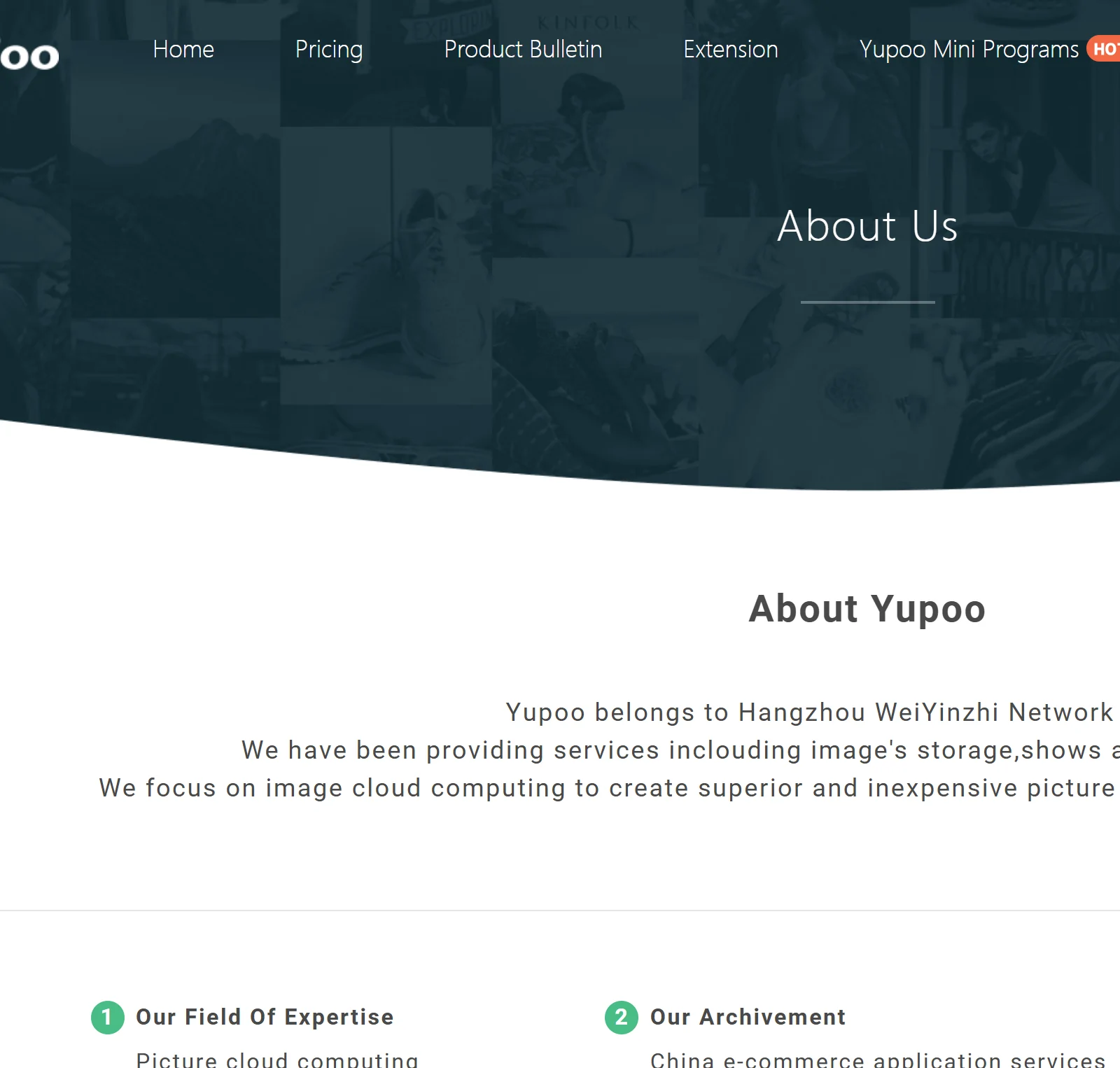
Yupoo is an image host. Its English About page says it belongs to Hangzhou WeiYinzhi Network Co., Ltd., and the Chinese version calls the service 又拍图片管家, a picture manager run by the same company. Both date the service to June 2005 and describe the core business as storing pictures, serving them to other sites and displaying them.
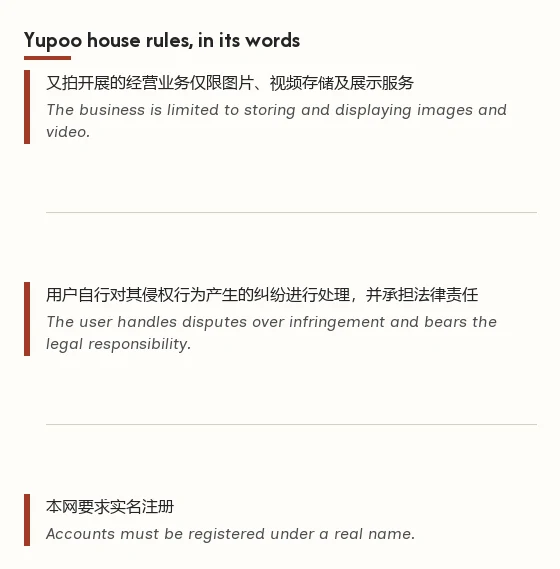
The intellectual property statement narrows that further: the business is limited to storing and displaying images and video, and all of it is uploaded by users. The footer carries a Zhejiang value-added telecom licence, 浙B2-20110282, and a copyright line running from 2005 to 2026. The interface comes in eight languages, simplified and traditional Chinese, English, Spanish, Portuguese, French, German and Russian.
For complaints the company lists two addresses on its contact page: one for online service and one for business enquiries. Its office is in Hangzhou.
What an album page is built from
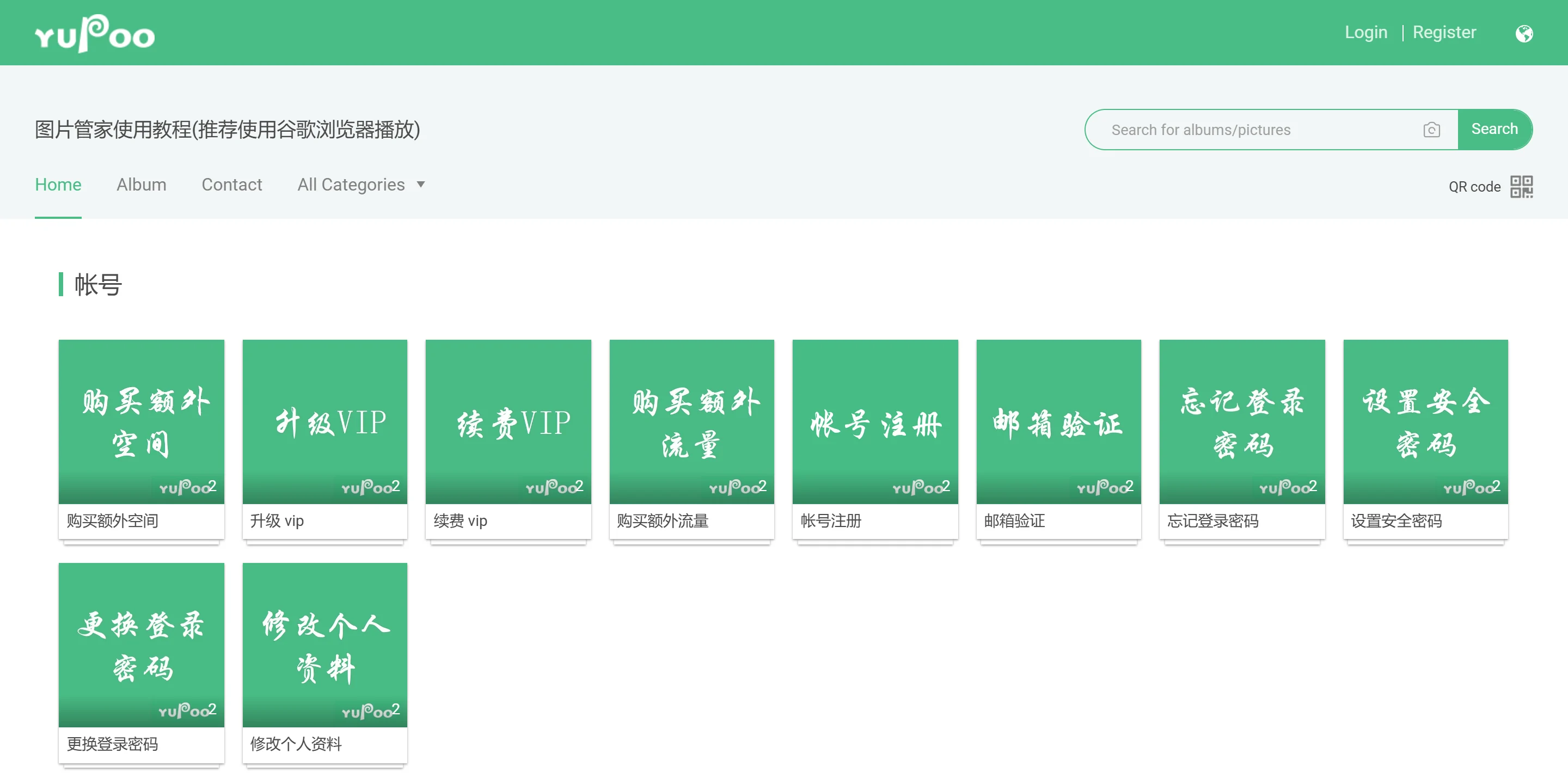
Every Yupoo account gets a public homepage with the same frame. Across the top sit four tabs: Home, Albums, Contact and All categories, plus a QR code for opening the page on a phone. Albums are numbered pages that hold the photos, a title and an optional description. The Contact tab shows whatever the owner typed into the contact profile, which may be a lot or nothing at all.
Owners choose a homepage layout from a menu that offers Default, Category, Album, E-commerce, Timeline and Category plus E-commerce, most of them marked VIP. The screenshot is Yupoo’s own tutorial account, help.x.yupoo.com, which uses the frame to host its how-to albums; it is the only account shown anywhere on this site.
Numbered album pages
Each album lives at its own numbered address under the account. This site never prints one: we link only to Yupoo’s company pages and its tutorial account.
Picture search
The tutorial account explains that searching another account’s pictures only works if that owner has switched the feature on, and that each search uses up one of your own allowance.
Plans, prices and what each one switches on
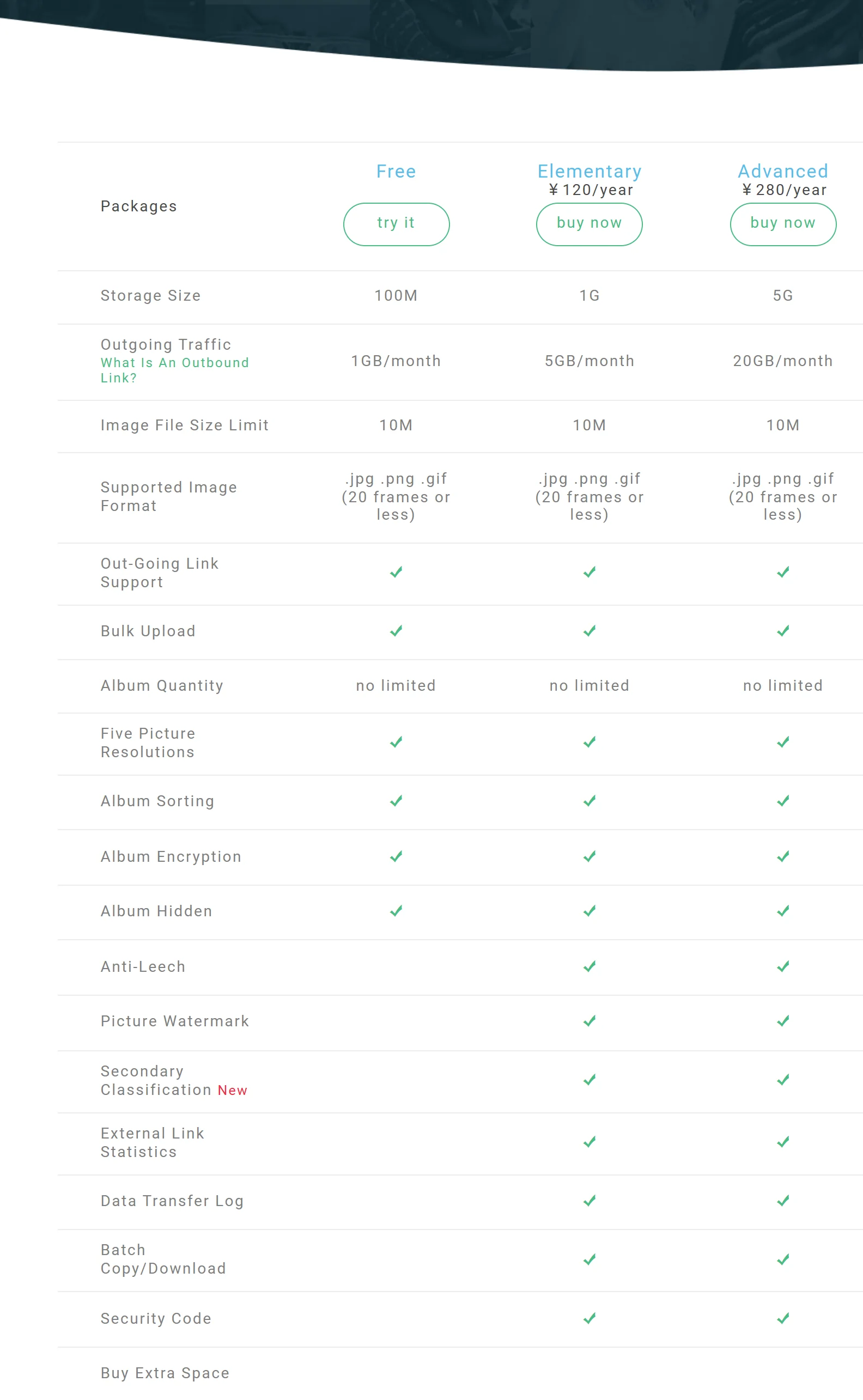
The pricing page lists five yearly plans: free, elementary at ¥120, advanced at ¥280, optimum at ¥480 and enterprise at ¥600. Storage grows from 100 MB to 50 GB, monthly outgoing traffic from 1 GB to 45 GB, and every plan allows an unlimited number of albums. The single-image limit is 10 MB on every tier except enterprise, which allows 20 MB.
The rows that matter to a buyer are the feature ticks. Album encryption and hidden albums are ticked on all five plans, the free one included. Anti-leech protection, picture watermarks, second-level categories, external link statistics, a transfer log, bulk copy and download, and a security code are ticked only on the four paid plans. Website visit statistics cost an extra ¥299 a year.
A tick tells you which tools an account could use. It says nothing about whether the person using them is honest. Read every paid feature as a tool, never as a credential.
Why the same photo turns up in many albums
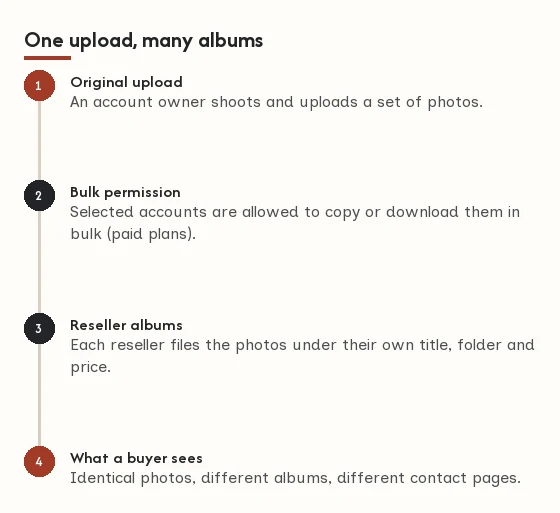
Yupoo sells itself to wholesalers. The Chinese homepage keywords include 淘宝相册、分销、批发、买家、卖家, and two of its features headline the pitch: authorise your agents to copy and download your pictures in bulk, and keep updates in sync so distribution runs smoothly. The tutorial account’s own page title ends with the words Supplier Product Catalog.
The result is that one set of photos can be copied, with permission, into dozens of albums run by resellers who never touch the goods. In practice a photo appearing in an album tells you only that the album owner has the photo. It does not tell you who holds the stock, who sets the price, or whether the album owner can still get the item.
Treat each album as one reseller’s offer. When two albums show identical pictures at different prices, you are looking at two offers for goods that may come from the same place, or from different places using the same photos.
No cart, no checkout, no buyer protection
An album page has a title, photos and a description. It has no basket, no checkout and no order history, and the intellectual property statement says outright that the business is limited to storing and displaying images. Where the statement deals with selling, it puts the burden on the uploader: a user who sells counterfeit or pirated goods handles the dispute and carries the legal responsibility.
Rights holders can complain by email with proof of ownership and the infringing links. Yupoo says it handles complaints within three to seven working days and can block access or end the service. That is one of the ordinary reasons an album you saved last month no longer opens.
Two smaller rules complete the picture. The user service terms require real-name registration for accounts, and every album page carries a risk warning that the pictures and videos are for display only. Yupoo describes no buyer protection, no refund route and no dispute desk for purchases, because in its own terms no purchase happens on Yupoo.
The job a China shopping agent takes on
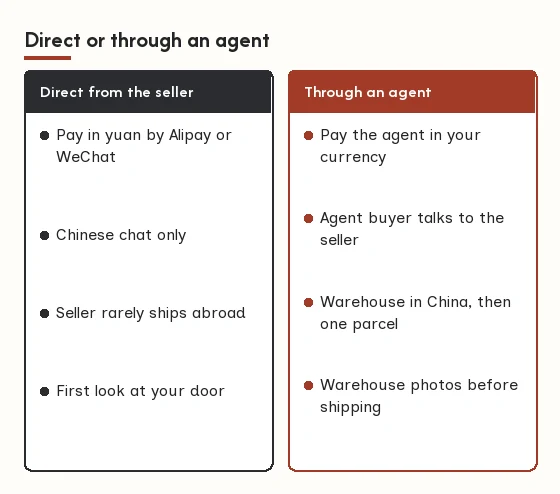
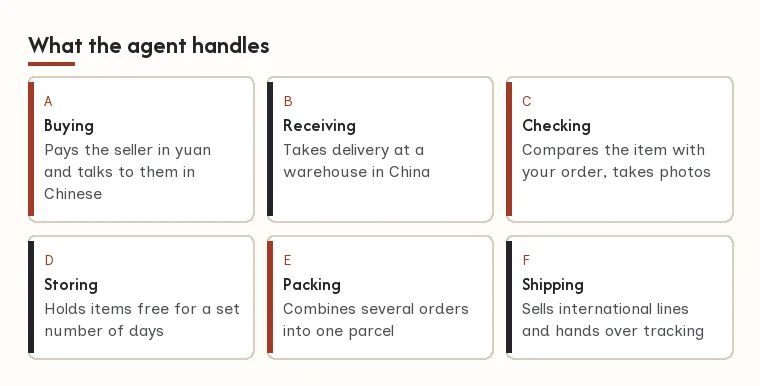
What is a China shopping agent? A company that acts on your behalf with Chinese sellers and buys for you. You send it a product link or a filled-in form and pay it in your own currency; its buyers pay the seller in yuan, and the seller ships to the agent’s warehouse inside China. There the item is checked against your order, photographed and stored. Later you pick the stored items that should travel together, and the line that flies or sails them abroad.
The agent earns from some mix of a service fee, the margin inside its exchange rate, value-added services such as extra photos or measuring, and the shipping it sells. Several agents now advertise no service fee on mainstream marketplaces, which moves the cost into the exchange rate and the shipping bill. The costs page takes those lines apart.
When an agent is the only way to pay
Why you need an agent here comes down to payment. Most album sellers sell inside China: they take Alipay or WeChat Pay in yuan, talk in Chinese chat apps and ship by domestic courier. Few will take a foreign card, and fewer will post a single parcel abroad. The agent supplies the Chinese payment, the Chinese address and the conversation.
The agent also gives you a checkpoint. Without one, the first time you see the item is when it lands at your door. With one, you see warehouse photos while the item is still in China and can still ask for an exchange or a return, within the seller’s and the agent’s rules.
When do you not need an agent? When the seller ships internationally and takes a payment method you can use, which happens with some export stores but rarely with album sellers. If the contact page shows neither a store link nor a chat contact, an agent cannot help either, because there is nobody to pay.